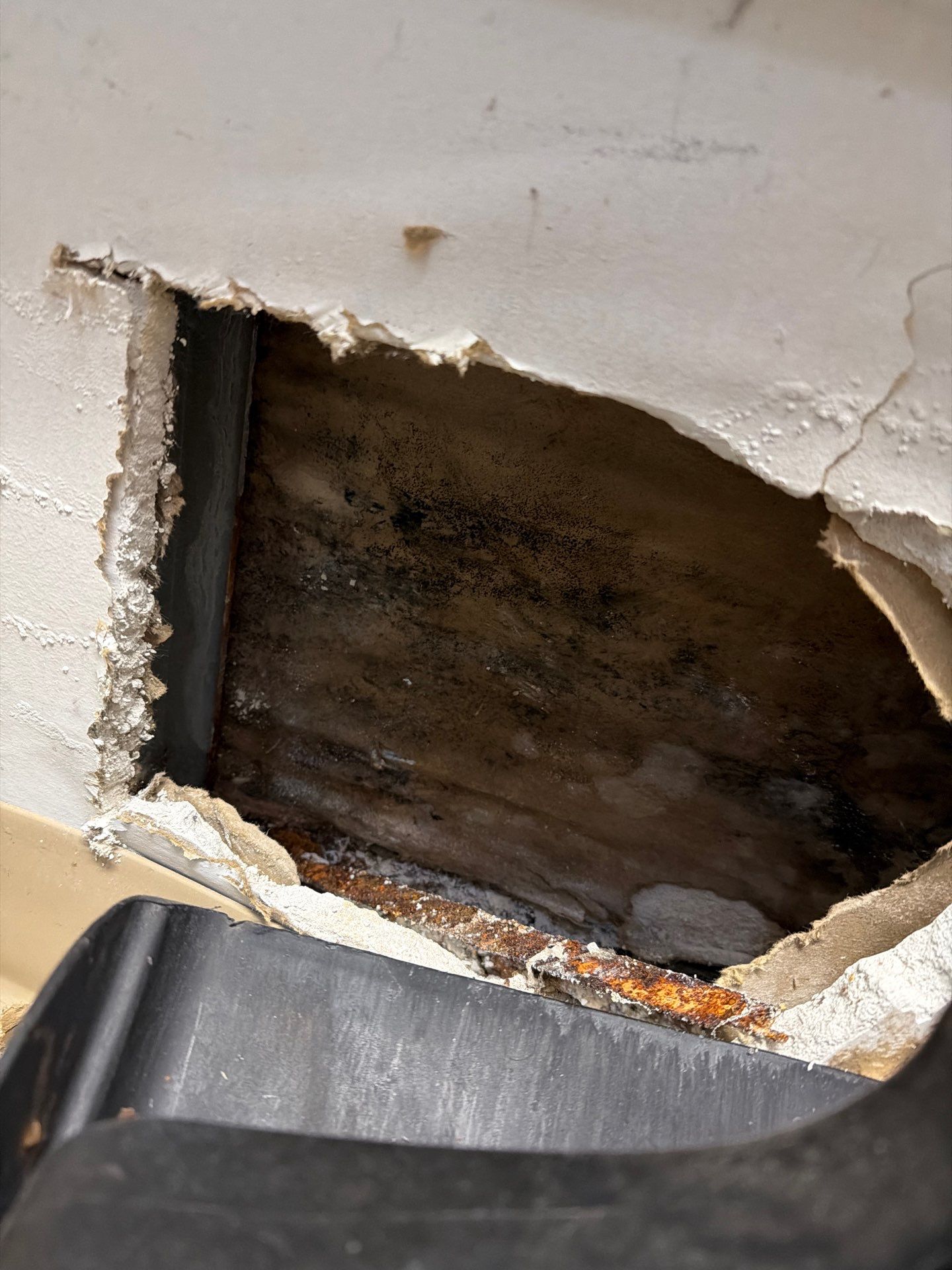
Why is my AC unit leaking water in the first place?
Your air conditioner pulls humidity out of the air, and that moisture has to go somewhere. It drips into a condensate pan under the evaporator coil, then drains out through a PVC condensate line that usually runs to a floor drain, a utility sink, or outside the house. When that line clogs with algae, dust, or biofilm, water backs up. The pan overflows. In Sheffield Park homes with attic air handlers, that overflow runs straight through the ceiling below. In basement or closet installs, it pools on the floor and wicks into baseboards and subfloor.
Other common causes we see include a cracked condensate pan on older units, a disconnected drain line that vibrated loose, a frozen evaporator coil that thaws all at once, and a failed condensate pump that simply stopped pushing water uphill. Indiana summers run humid, so a unit running 12 hours a day can produce 5 to 20 gallons of condensate in 24 hours. That is a lot of water to dump into a ceiling or closet floor unnoticed.
We also see installation issues that take years to surface. A drain line installed with insufficient slope (less than 1/8 inch per foot) will eventually trap sediment and clog. A trap that was never primed lets sewer gas push water backward. Foam insulation wrapped tightly around a copper refrigerant line can sweat condensation that mimics a drain leak, sending homeowners chasing the wrong problem. A proper diagnosis starts at the air handler and follows the water, not the assumption.
How much water damage can a slow AC leak actually cause?
More than you would think. A pinhole drip from a condensate line might only release a cup of water per hour, but multiply that by 200 hours of cooling and you have roughly 12 gallons soaked into drywall, insulation, and framing. We have opened ceilings in Sheffield Park where the drywall was holding water like a wet sponge and the joists above had blackened with surface mold.
AC condensate water starts as Category 1 (clean water), but it does not stay that way. Once it sits in a drain pan growing algae and biofilm, then soaks into porous building materials for more than 48 to 72 hours, IICRC standards reclassify it as Category 2 grey water. At that point you cannot just dry it in place. Contaminated insulation has to come out, affected drywall typically needs removal, and the cavity has to be cleaned and treated before reconstruction. Our breakdown on grey water damage and Category 2 cleanup walks through exactly how that process works.
How do I prevent this from happening again?
Flush your condensate line with a cup of distilled vinegar every spring and fall. Have your HVAC tech clear the line and inspect the pan during annual service. Install a float switch on the secondary pan if you do not already have one. In humid Sheffield Park summers, run a dehumidifier in basements and finished attics to reduce the load on your system. Consider adding a smart water sensor near the air handler that pings your phone the moment it detects moisture. A $25 sensor has saved Sheffield Park Water Restoration customers thousands in avoided repairs.
What does AC leak restoration actually cost?
For a minor leak caught early (small ceiling stain, no structural saturation), professional drying and a drywall patch usually runs $500 to $1,500 in the Sheffield Park area. A moderate loss involving one ceiling section, insulation removal, and partial drywall replacement typically lands between $1,800 and $4,500. Larger losses with mold growth, multi-room moisture migration, or floor damage below the unit can reach $6,000 to $12,000 or more. Our full water damage restoration cost breakdown shows how scope, square footage, and category drive pricing.
What should I do in the first hour after I notice the leak?
Turn the AC off at the thermostat. Do not just raise the temperature, actually switch the system to off so the unit stops producing condensate. Then shut off the breaker to the air handler. Place a bucket or towels under the active drip and move furniture, rugs, and electronics out of the area. If the ceiling is bulging, poke a small relief hole at the lowest point with a screwdriver and let the trapped water drain into a bucket. That sounds aggressive, but it prevents the entire section from collapsing on your floor.
Take photos of everything before you clean up. Date-stamped images of stains, sagging drywall, wet flooring, and the unit itself are what your insurance adjuster will want to see. Then call a restoration company. The faster drying starts, the better your chance of staying in Category 1 and avoiding mold remediation costs.
Can I clear a clogged condensate line myself?
Sometimes, yes. If you are comfortable working around your air handler, locate the cleanout (a capped vertical T-fitting on the drain line near the unit). Remove the cap and pour in a cup of distilled white vinegar or a 50/50 vinegar and warm water mix. Let it sit for 30 minutes, then flush with a gallon of clean water. For more stubborn clogs, attach a wet/dry vac to the outdoor termination of the drain line, seal the connection with duct tape, and run it for two or three minutes to pull the blockage through.
If water still backs up after a thorough flush, or if you cannot find the cleanout, stop and call an HVAC tech. Forcing pressurized air or chemical drain cleaners into a PVC condensate line can crack joints inside the wall, and now you have a hidden leak on top of the original problem.
What are the warning signs before the ceiling collapses?
Most ceiling failures we respond to had warning signs the homeowner missed for weeks. Watch for a yellow or brown stain that slowly expands, sagging or bubbling paint, a soft spot when you press the drywall, peeling tape at the seams, or a musty smell near a return vent. In closets, look at the baseboard behind or beside the air handler. If it is swollen, cupped, or pulling away from the wall, water has been running down for a while.
You should also check the secondary drain pan if your unit has one. That pan exists specifically to catch overflow when the primary line clogs. If you find standing water in it, your primary line is already failing. A working float switch should have shut the unit off, but those switches fail too. For more on this category of slow leak, our piece on hidden leak detection behind walls covers the moisture mapping tools we use to find the full footprint.
Will my homeowners insurance cover an AC condensate leak?
Usually yes, with caveats. Most policies in Sheffield Park cover sudden and accidental water damage from an HVAC system, which includes a cracked pan or a failed pump. They typically do not cover damage from long-term seepage, which insurers define as leaks that have been occurring for 14 days or more. That is why documenting the timeline matters. If you noticed the stain Tuesday and called us Wednesday, you have a much cleaner claim than if you ignored it for two months.
The repair of the AC unit itself is almost never covered. The water damage to your ceiling, drywall, insulation, flooring, and personal property generally is. Sheffield Park Water Restoration writes IICRC-aligned scopes that adjusters recognize, and we can bill your carrier directly on approved claims.