How do I know if my attic actually has water damage?
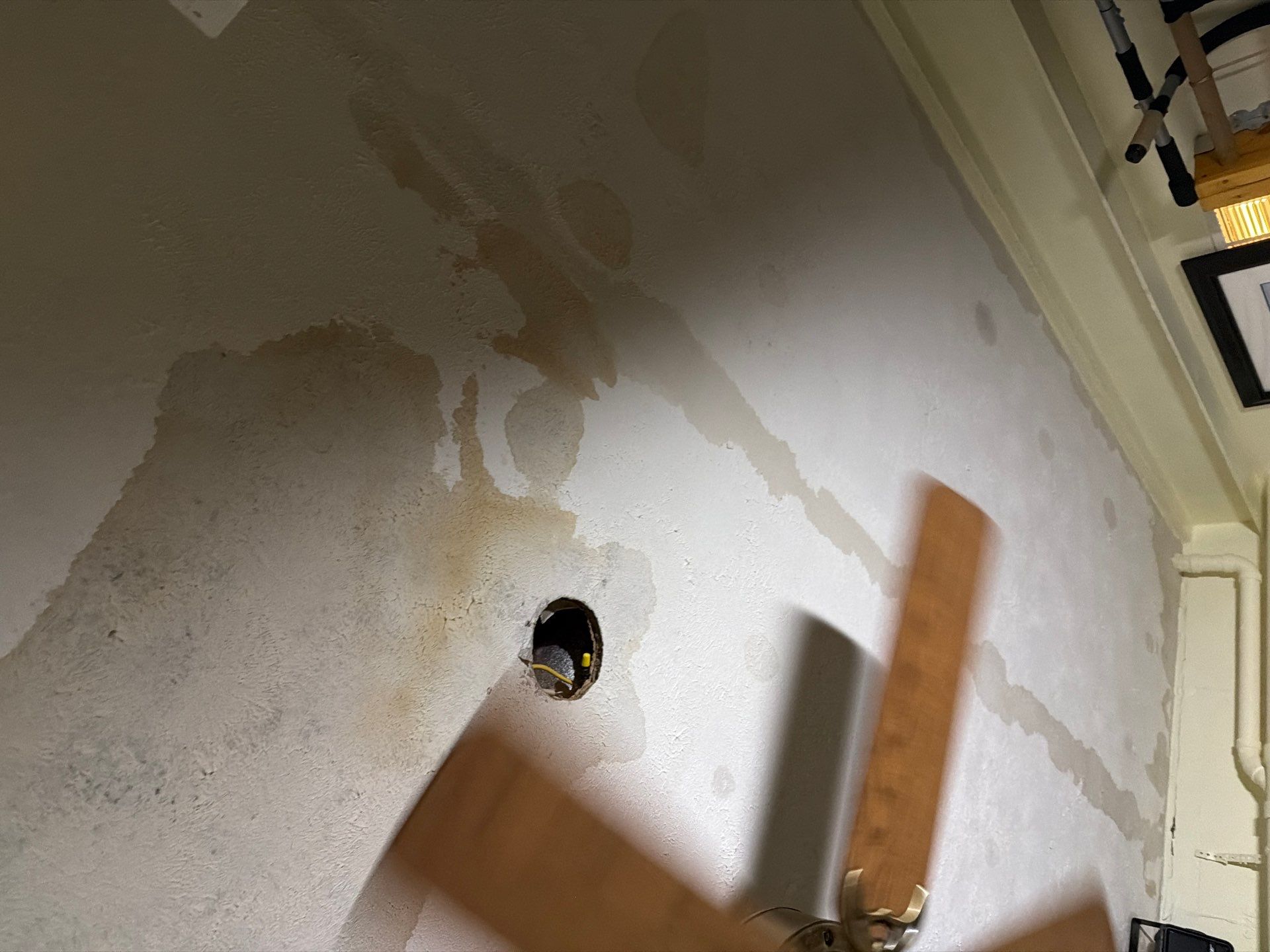
Most Sheffield Park homeowners notice the symptoms before they notice the source. You might see a yellow or brown stain spreading across a ceiling, paint that bubbles slightly, or a faint earthy smell when you walk past a closet. In the attic itself, the signs are more direct. Look for dark streaks running down the underside of the roof deck, insulation that is matted or discolored, rusted nail tips, and any wood that looks darker than the boards around it. If you press a fingertip into a rafter and it feels soft or spongy, water has been there long enough to start breaking down the fibers. Our crews confirm what is happening with moisture meters and thermal cameras, because surface appearance only tells part of the story.
Another tell that homeowners often overlook is the behavior of the air itself. Attics with active moisture problems tend to feel heavier and warmer than they should, even on cool days, and the smell of damp wood tends to linger near the ridge where warm air collects. If you have a bathroom fan, kitchen exhaust, or recessed lighting that suddenly seems to sweat or drip during heavy rain, that is also worth flagging during an inspection.
What causes most attic leaks in the first place?
Roof leaks in Sheffield Park homes usually trace back to a handful of failure points. Cracked or missing shingles let rain enter directly. Flashing around chimneys, skylights, and vent stacks loosens over time and channels water along the underside of the roof deck. Ice dams form along eaves in cold weather, pushing melted snow back under shingles. Clogged gutters spill water against the fascia, where it works its way into the soffit and attic. Sometimes the leak is not from outside at all. A poorly insulated bathroom fan venting into the attic instead of through the roof creates enormous amounts of condensation, and we have seen that mistaken for a roof leak more than once. A careful inspection separates the actual source from the symptoms.
How can I prevent this from happening again?
Once the immediate damage is handled, a few habits go a long way in Sheffield Park. Have your roof inspected every couple of years, especially after major storms, and keep gutters and downspouts clear so water actually drains away from the fascia. Confirm that every bathroom fan, dryer vent, and kitchen exhaust terminates outside the home rather than dumping warm moist air into the attic. Check attic ventilation, since balanced soffit and ridge vents keep humidity from building up under the roof deck. A quick visual walkthrough after the first heavy rain of the season often catches new issues before they soak insulation or stain a ceiling below.
How much should I expect this to cost?
Attic water damage restoration in Sheffield Park typically runs anywhere from $1,500 for a small isolated leak to $8,000 or more when insulation replacement, mold remediation, and ceiling repair below are all involved. The size of the wet area, how long the leak has been active, and whether mold has taken hold are the biggest variables. After our free assessment, you get a written scope with line-item pricing so there are no surprises later.
What does the restoration process look like?
When Sheffield Park Water Restoration responds to an attic water damage call in Sheffield Park, our crew typically arrives within 2 hours of your call. We start by locating the active leak and stabilizing it with a temporary patch or tarp so no more water enters. Then we map the moisture using meters and infrared imaging, because what looks dry on the surface often is not. Saturated insulation comes out, soaked sheathing gets evaluated for replacement, and we set up containment so debris and spores do not migrate into the living space below. Air movers and dehumidifiers run until structural materials hit dry standard, usually three to five days depending on conditions. If mold is already present, we follow IICRC S520 protocols for safe removal.
Once drying is complete, we document final moisture readings and provide a clearance report. From there, reinsulation and any necessary sheathing or drywall repairs can move forward with confidence that the cavity is genuinely dry. Skipping that documentation step is one of the most common mistakes we see when homeowners try to coordinate the work piecemeal, because new insulation installed over hidden moisture simply restarts the problem.
Why is attic water damage so easy to miss?
Attics are insulated, dark, and visited maybe twice a year. Water spreads quietly across the top of insulation batts, soaks downward, and gets absorbed before it reaches anything you would notice. Fiberglass insulation can hold gallons before it begins dripping through the ceiling below. By the time a stain appears on your bedroom ceiling, the leak above it has often been active through several rain cycles. This is one reason we encourage homeowners to read up on the early warning signs of hidden water damage, because catching things early in the attic is far cheaper than catching them in the drywall, paint, and flooring below.
Can I handle any of this myself?
You can do the safety work. Move belongings out from under the affected ceiling, put a bucket beneath any active drip, and shut off electricity to the affected area if water is near fixtures or wiring. Beyond that, attic work is genuinely risky. The footing is uneven, the air is hot, insulation irritates skin and lungs, and the line between safe joists and unsupported drywall is easy to miss. Diagnosing whether sheathing can be saved or must be replaced takes experience. We are happy to come out, look at what you have, and tell you honestly whether you need full restoration or just a roofer and some patience.
What happens if I just let it dry on its own?
Wet insulation does not recover. Once fiberglass or cellulose gets saturated, it loses most of its R-value and stays compressed even after surface moisture evaporates. Your heating and cooling bills climb. The wood framing underneath holds moisture longer than the air around it, which creates a slow drying environment that mold loves. Within 24 to 48 hours of saturation, mold spores start colonizing organic materials. That timeline is why we treat attic leaks as urgent even when the visible damage looks small. If you want the full picture on that window, our article on how fast mold grows after water damage walks through it in detail.
There is also a structural side that often gets ignored. Roof sheathing is usually thin OSB or plywood, and once it absorbs water repeatedly, the layers begin to delaminate. You can sometimes see this as a sagging spot between rafters or a soft area when pressure is applied from below. Replacing sheathing after the fact is significantly more expensive than drying it during the first event, which is another reason waiting things out rarely saves money.
Will my homeowners insurance pay for this?
In most cases, sudden and accidental roof damage from a storm, falling tree, or wind event is covered. Gradual leaks from worn shingles or deferred maintenance often are not. Your adjuster will want photos, moisture readings, and a clear cause-of-loss explanation, all of which we document during the assessment. We work with insurance carriers regularly and can walk you through the basics of filing a water damage insurance claim if this is your first time. Every policy reads differently, so we encourage you to call your carrier early in the process.